
5 Signs You Need Gutter Repair vs. Just Cleaning in Atlanta
It's a sound every Atlanta homeowner knows: a summer thunderstorm blows in, the rain comes down in sheets, and your gutters turn into waterfalls — pouring over the edges instead of down the downspouts. The first thought is always the same. I just need to get the gutters cleaned.
Sometimes that's exactly right. But after nearly five decades of inspecting gutters across Metro Atlanta, here's what we know: not every overflowing gutter is a dirty gutter. A surprising number of the homes we visit don't need debris removal at all — they need repair. And if we simply cleaned a gutter with a failed fastener or a leaking seam, the problem would be back with the very next rain.
So before you book anyone, learn the five signs that point to repair rather than cleaning. Catching them early turns a big headache into a small fix — and keeps water out of the one place it can do the most damage: your foundation.
Sign 1: Your Gutters Are Pulling Away from the House
Stand at the corner of your house and sight down the gutter line. It should run in a clean, even plane against the fascia board. If you see sagging sections, gaps between the gutter and the board behind it, or runs that visibly angle away from the roofline, the fasteners have failed — from rusted hardware and rotted fascia to years of waterlogged debris pulling everything loose.
Why cleaning won't fix it: clearing debris lightens the load, but compromised fasteners stay compromised. The sag returns, and one day the section pulls away entirely — sometimes taking a piece of fascia with it. That's a repair job, and it grows pricier every season you wait.
Sign 2: Water Stains on the Wall Below the Seams
After the next good rain, walk the house and look at the siding or brick directly below where gutter sections join. Dark streaks, green algae stains, or tide marks on the wall usually mean a seam is leaking. The sealant between sections simply wears out — years of Georgia sun, summer heat, and winter freeze-thaw cycles eventually win.
Why cleaning won't fix it: a spotless gutter with a failed seam still leaks — the water escapes through the joint, not over the top. Seams can be resealed and separated sections re-joined, but only by repair — never by a cleaning visit.
Sign 3: Rust, Holes, or Cracks in the Metal
If your home is in one of Metro Atlanta's older, tree-lined neighborhoods — the historic streets of Marietta and Decatur, the older sections of Roswell, the heart of Buckhead — look closely at the gutters themselves. Orange rust spots (which become holes), pinholes visible from the ground, cracks at corners and end caps, or paint flaking down to bare metal all mean the metal itself is failing.
Why cleaning won't fix it: a hole doesn't care how clean the trough is. Water finds it and dumps out mid-run, right against your wall or trim. Small holes can be patched and single sections replaced, but rust in several places becomes a conversation about replacement — an honest inspection should settle that.
Sign 4: A Section Has Fallen Off Entirely
This one is obvious, but it's worth spelling out what a missing gutter section really means: every drop of water from that stretch of roof is now dumping straight down your siding and against your foundation. On Metro Atlanta's red clay soil, concentrated runoff erodes the ground, pools along the slab, and works moisture into places it was never meant to be. One afternoon storm can do real damage — and Georgia's storm season supplies plenty of afternoons.
Sign 5: Water Pouring Behind the Gutters
Next time it rains hard, watch the top edge of your gutters from a window or the porch. Water should flow into the trough. If you see it cascading down the fascia behind the gutter — staining the board, wicking into the soffit, splashing the wall — the gutter is pitched wrong, hung too low, or missing drip-edge flashing at the roof edge.
Why cleaning won't fix it: this isn't a debris problem; it's a geometry problem. The run has to be re-pitched, repositioned, or fitted with proper flashing. Left alone, the constant wetting rots fascia and soffit — repairs that reach well beyond the gutter itself.
Cleaning or Repair? A 60-Second Check
Still not sure which camp you're in? Run through this quick check from the ground:
It's probably just a cleaning if:
Water overflows in heavy rain, but the gutters are firmly attached and run true along the fascia
You can see leaves, shingle grit, or pine straw sitting in the trough
It's been six months or more since the last cleaning
The downspouts run slow, but nothing sags, leaks, or drips from the seams
It's probably a repair if:
Gutters sag, gap away from the fascia, or pull loose at the corners
Water stains or algae streaks show on the wall below the seams
You can spot rust, holes, or cracks in the metal
Water pours behind the gutter instead of into it
If you land in the second list — or somewhere confusing in between — get an honest set of eyes on it before the next storm.
Why Atlanta Gutters Take Such a Beating
It's not your imagination — Metro Atlanta is uniquely hard on gutter systems. Our pines and oaks shed needles and leaves deep into winter, and in neighborhoods around Marietta and across Cobb, Cherokee, and North Fulton, pine needles are notorious for weaving dense mats that shed water straight over the gutter's edge. February through May piles pollen on everything, and summer thunderstorms can drop a month's worth of rain in an hour.
That's why we recommend cleaning gutters at least twice a year — late fall, after the leaves come down, and early spring, before the heavy rains — with heavily pine-covered homes often needing more. Midsummer is a smarter checkpoint than most people realize; here's why July is the perfect time for gutter cleaning. And when you're planning the rest of the season, our fall home prep checklist puts gutters, windows, and siding in order before winter. Gutter cleaning sits alongside window cleaning and pressure washing in our core services.
The Real Cost of Waiting
A gutter has exactly one job: catch the water coming off your roof and carry it away from your home. When it can't — clogged, sagging, leaking, or missing — every drop goes somewhere you don't want it: down the walls, behind the fascia, into the soil along the foundation.
Here's the plain arithmetic. Resealing a seam or rehanging a section is a small, routine job. Repairing rotted fascia, replacing water-stained siding, or drying out a wet crawlspace is not — and foundation trouble dwarfs all of it. Water damage is patient; it doesn't announce itself until the bill is big. That's the whole reason we'd rather tell a homeowner "this needs a repair, not a cleaning" than sell a visit that won't solve anything.
Frequently Asked Questions
How do I know if my gutters need repair or just cleaning?
Cleaning solves overflow caused by debris: the gutters are firmly attached and running true, you can see leaves or pine straw sitting in the trough, and it's been six months or more since the last visit. Repair is what fixes structural problems: gutters sagging or pulling away from the fascia, water stains on the wall below the seams, rust or holes in the metal, or water pouring behind the gutter during rain. If you're not sure which you have, an honest inspection settles it in minutes.
How often should gutters be cleaned in Atlanta?
At minimum, twice a year — once in late fall after the leaves drop, and once in early spring before the heavy rains start. Homes with heavy pine coverage, which is common across Cobb, Cherokee, and North Fulton, often need more frequent visits, because pine needles weave into mats that block water faster than leaves alone.
What happens if I ignore gutter problems?
Water always wins. Overflowing or leaking gutters soak the fascia, stain the siding, erode the soil along your foundation, and work moisture into basements and crawlspaces. A leaking seam is a minor fix; rotted wood and foundation trouble are not. The gap between those two outcomes widens with every storm, which is why gutter problems are cheapest exactly when they're smallest.
Do you repair gutters or just clean them?
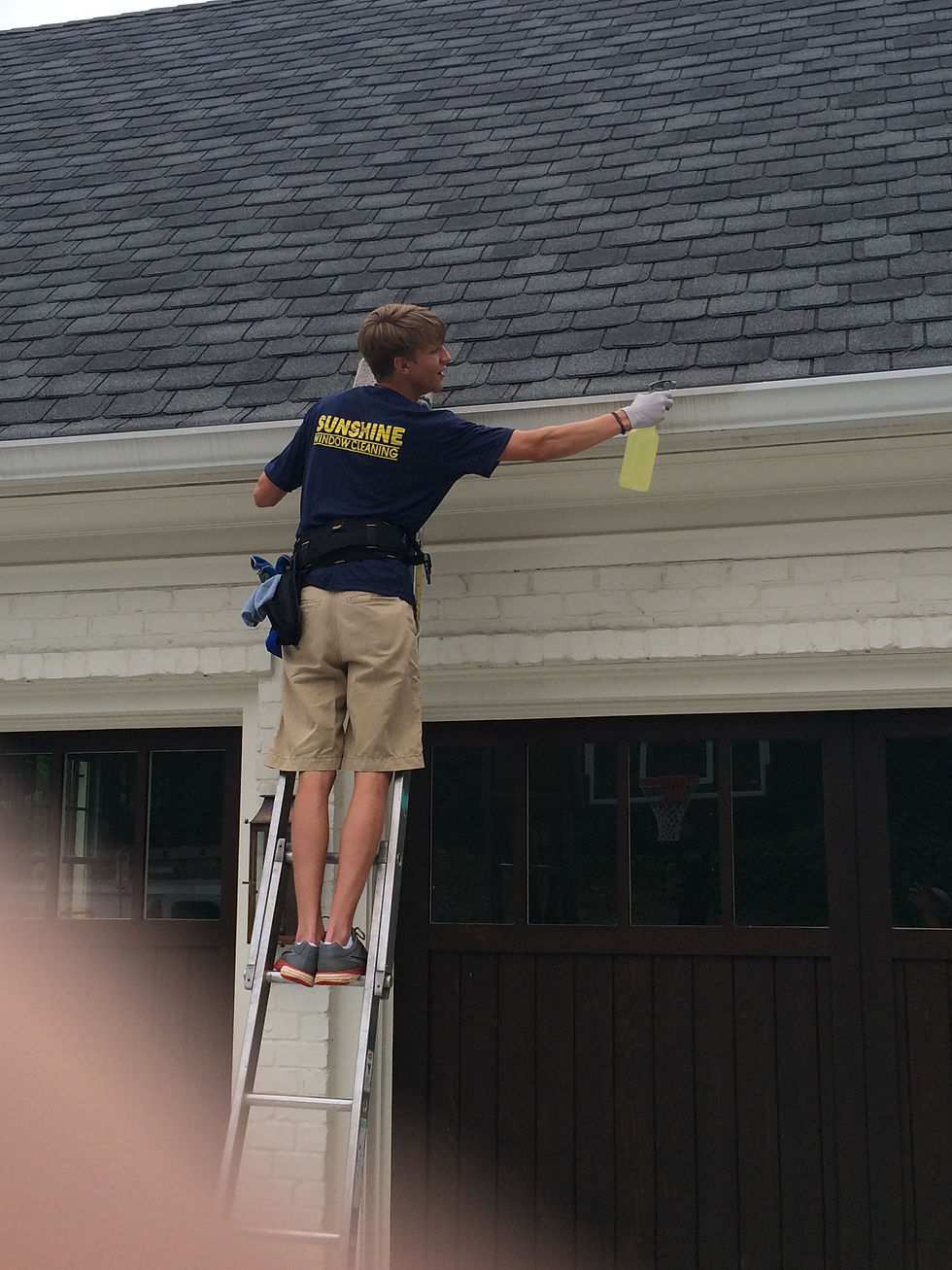
Sunshine Window Cleaning has cleaned and inspected gutters across Metro Atlanta since 1978, and every visit includes an honest look at the whole system. If we find something a cleaning won't fix — a failed fastener, a leaking seam, a section pulling loose — we tell you plainly what it needs. We would rather point you to the right fix than sell you a service that won't solve the problem.
Not Sure Whether It's a Cleaning or a Repair?
Skip the guesswork. Request a free quote from Sunshine Window Cleaning — bonded, insured, and guaranteed, and giving Metro Atlanta straight answers since 1978. We'll tell you exactly what your gutters need, and nothing they don't.


Comments